شركة التقنية
- 31 January
- 0 Comment
- 569 مشاهدة

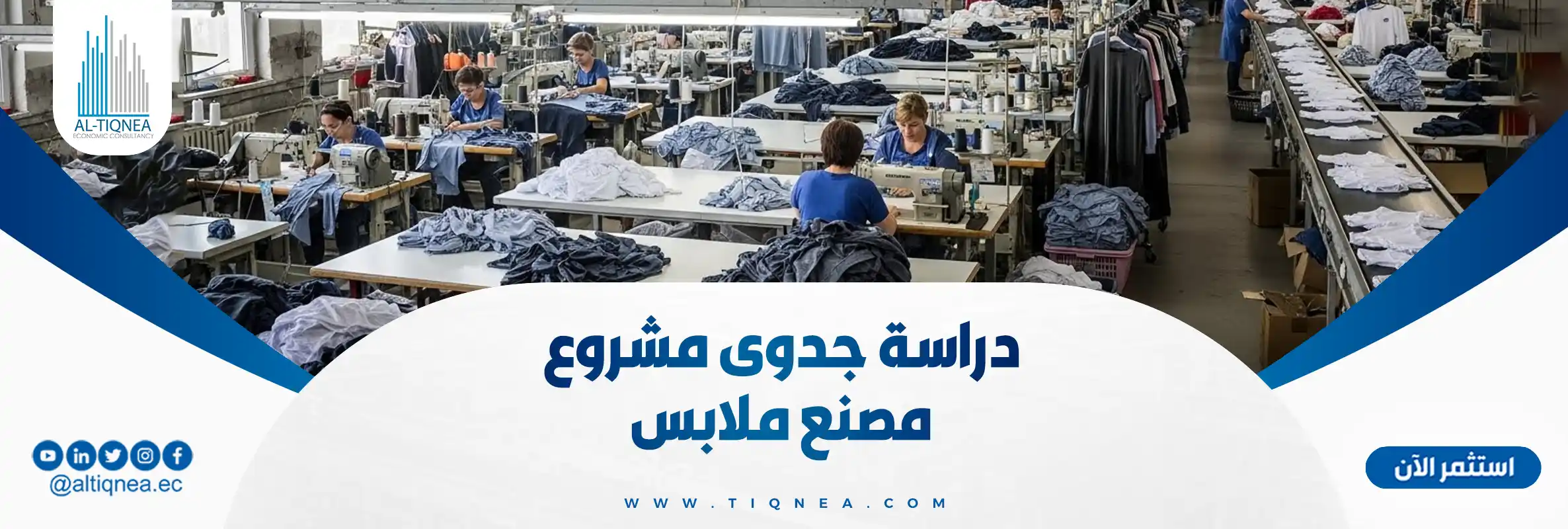
A feasibility study for a garment factory project represents the real foundation for launching a successful industrial venture in one of the most dynamic and competitive industries. It goes beyond presenting numbers, offering an integrated vision that helps investors understand the market, determine demand size, and analyze consumption patterns and prevailing trends in the apparel sector.
The feasibility study addresses the financial and technical aspects of the project, starting with estimating the investments required for purchasing production lines and raw materials, through operating and labor costs, and reaching expected revenues and profit margins. It also focuses on assessing potential challenges and risks such as market fluctuations and intense competition while proposing practical solutions to mitigate their impact.
Through the preparation of a well-structured operational and financial plan, the feasibility study contributes to maximizing resource efficiency and achieving financial stability, making it a strategic tool essential for ensuring the sustainability, growth, and competitiveness of a garment factory in the market.
A feasibility study for a garment factory project is a comprehensive analysis aimed at evaluating the viability of establishing the factory from economic, technical, marketing, and financial perspectives before starting implementation.
The study helps investors to:
Understand the size of demand in the target market
Identify the types of required products (men’s, women’s, children’s, ready-made garments, or export-oriented products)
Determine appropriate production capacity and required production lines
It also includes an analysis of capital and operating costs, estimation of expected revenues, measurement of profitability indicators and return on investment, as well as risk assessment and scenario planning. This ensures informed investment decisions that minimize risks and enhance the chances of success.
The feasibility study procedures for a garment factory go through several main stages, including:
Analyzing the size of the local or export market
Studying consumer behavior and prevailing trends in the apparel industry
Analyzing competitors, pricing strategies, and market shares
Determining product types and manufacturing materials
Selecting the appropriate factory location and required space
Identifying production lines, machinery, and equipment
Estimating technical and administrative labor requirements
Defining production stages and workflow within the factory
Developing quality control, storage, and packaging plans
Determining energy and utility requirements
Estimating the cost of establishing the garment factory (land, buildings, equipment)
Calculating operating costs (raw materials, wages, maintenance, utilities)
Preparing financial projections (revenues, profits, cash flows)
Calculating feasibility indicators such as break-even point and return on investment
Assessing market risks and price fluctuations
Evaluating operational and supply chain risks
Proposing mitigation strategies
The cost of establishing a garment factory varies depending on several key factors, including:
Factory size and production capacity
Type of garments produced (local market, export, specialized clothing)
Level of technology and production lines
Factory location and land or rental costs
Labor costs and workforce size
Small factory: Relatively low investment cost serving the local market
Medium-sized factory: Higher investment with integrated production lines
Large or export-oriented factory: Requires significant investment, including advanced equipment and quality, packaging, and compliance systems
Licenses are a fundamental component of a garment factory feasibility study to ensure legal operation and avoid future regulatory obstacles. Key licenses and requirements include:
Commercial registration and tax card
To establish the factory’s legal entity and operate officially
Industrial activity license
Issued by the competent authority (Industrial Development Authority or relevant entity), specifying activity type and production capacity
Environmental approval
From the Environmental Affairs Agency, ensuring compliance with environmental regulations
Occupational health and safety license
To provide a safe working environment in accordance with industrial safety standards
Civil defense and fire protection approvals
Including fire-fighting systems, alarms, and emergency exits
Utility licenses
Such as electricity, water, and gas (if applicable), aligned with operational needs
Quality certifications (optional but important)
Especially for export-oriented factories or cooperation with major brands
The success of a garment factory feasibility study and the achievement of project objectives depend on several strategic factors, including:
Conducting an accurate market study
Selecting an appropriate factory location
Choosing suitable production lines
Preparing realistic financial estimates
Efficient operational management
Compliance with legal and environmental standards
Implementing an effective marketing plan
Flexibility for expansion and development
Al-Tiqnea does not only provide feasibility studies; it delivers integrated investment solutions, including:
Preparing certified and accurate feasibility studies
Supplying production lines and necessary equipment
Developing implementation plans and transferring project know-how
Executing projects on a Turnkey Service basis and delivering them ready for operation
Providing consulting and management services to ensure sustainable operations and profitable returns
To request a feasibility study for your project or schedule a consultation, contact us now and one of our experts will get in touch with you shortly.
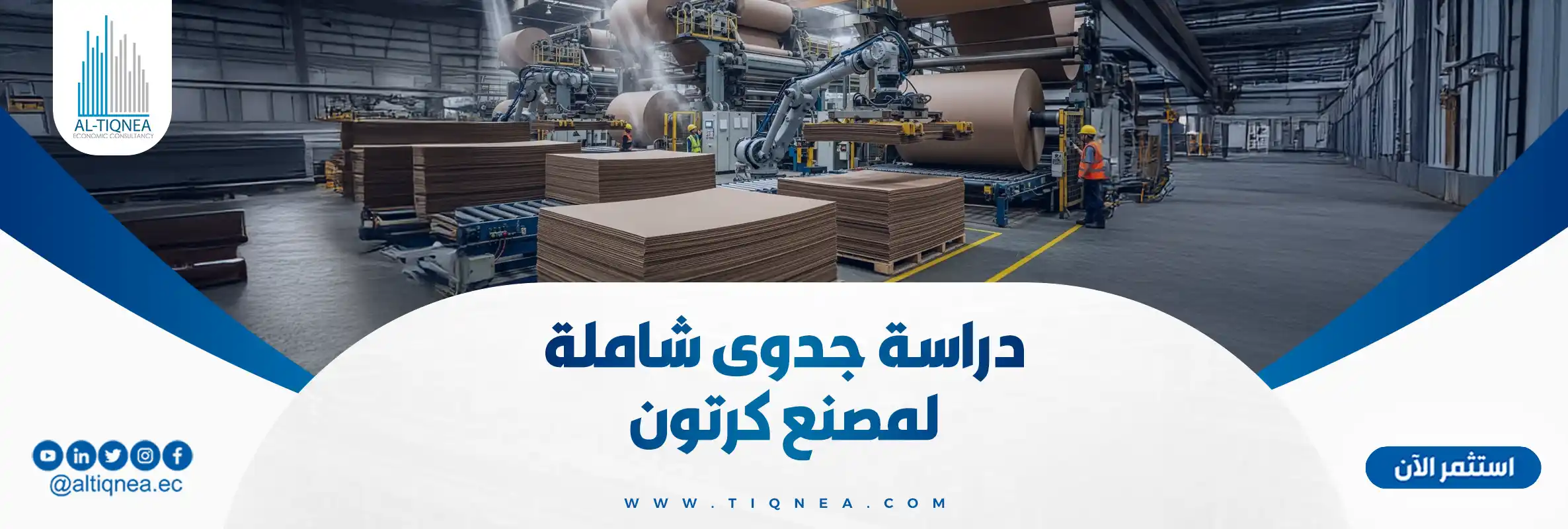
Comprehensive Feasibility Study for a Carton Factory The carton industry is one
New Incentives for Industrial Projects in Egypt The Ministry of Industry announced
Production Line Financing for Industrial Projects Al-Tiqnea Company announces a new strategic
Discover the Most Promising Industrial Sectors for Investment in the UAE On
إستثمر الآن في 28 فرصة لصناعات واعدة وفقًا لوزارة الصناعة طرحت وزارة
حوافز وفرص استثمارية واعدة في القطاع الصناعي حوافز وفرص استثمارية واعدة في