شركة التقنية
- 25 December
- 0 Comment
- 47 مشاهدة


Any industrial project, no matter how strong its idea may seem, remains exposed to risks if it is not built on a thorough and accurate study. A feasibility study enables investors to see the full picture before implementation by assessing market demand, estimating costs, analyzing expected returns, and identifying potential challenges. Therefore, a feasibility study stands out as a key element in reducing risks and making investment decisions based on real data and market realities.
At Al-Tiqnea, we believe that a feasibility study is not merely numbers or theoretical reports, but a practical roadmap that reveals potential challenges, evaluates success opportunities, and supports well-informed investment decisions that ensure project sustainability and maximize return on investment.
Risks in industrial projects refer to all factors or possibilities that may negatively affect project implementation, continuity, or profitability, whether during the planning phase or actual operation. These risks may lead to increased costs, weak sales, operational disruptions, or even complete project failure if not addressed early.
Industrial project risks are mainly categorized into the following types:
Market Risks: such as weak demand for the product, changes in consumer behavior, intense competition, or inability to price competitively.
Financial Risks: including inaccurate estimation of capital and operating costs, liquidity shortages, weak cash flows, or inability to meet financial obligations.
Technical and Operational Risks: such as selecting an unsuitable production line, unrealistic production capacity, equipment failures, or lack of technical and managerial expertise.
Regulatory and Legal Risks: including changes in laws and regulations, difficulties in obtaining licenses, or non-compliance with environmental and industrial requirements.
Management Risks: resulting from poor planning, weak management, or lack of monitoring and control systems.
Thus, risks are not exceptional in industrial projects; they are a natural part of any investment. The difference between a successful project and a struggling one lies in the ability to anticipate, analyze, and prepare for these risks—an objective achieved through a professionally prepared feasibility study.
Some projects fail despite having sufficient capital because money alone does not guarantee success in the absence of proper planning, analysis, and execution. Project failure often stems from several key reasons, including:
Funds are invested in projects that are not properly studied in terms of market demand, actual costs, or competitive ability, leading to incorrect investment decisions from the outset.
Even with funding, a project may fail if the product does not meet real market needs, is incorrectly priced, or faces stronger competitors without a clear competitive advantage.
Relying on overly optimistic or inaccurate figures leads to rapid capital depletion, especially when unexpected expenses arise or revenues are delayed.
Such as choosing an inappropriate production line, excessive production capacity relative to market demand, or low operational efficiency, all of which increase costs and reduce profitability.
Capital availability cannot compensate for the lack of managerial expertise, weak monitoring systems, or poor human resource and operational management.
Some projects lack alternative plans to deal with price fluctuations, market changes, or delays in operation, making them more vulnerable to failure.
In many cases, the project is implemented differently from the original study or plan, causing financial and operational imbalance.
At Al-Tiqnea, we support you from the very beginning—helping you make the right investment decision to implement your project safely and successfully, starting from idea selection and feasibility study to delivering the project fully operational through our Turn-Key Service.
Contact us today and start your investment project with confident steps and a clear vision toward a better future.
إستثمر الآن في 28 فرصة لصناعات واعدة وفقًا لوزارة الصناعة طرحت وزارة
أفضل فرص الاستثمار في مصر بعد رسوم ترامب على الصين أفضل فرص
أمريكا ترفع الرسوم الجمركية على الصين إلى 104٪ كتب أحمد عبداللطيف الشريف،
مستهدفات الحكومة السعودية في عام 2024 مستهدفات الحكومة السعودية في عام 2024,حسب
10% زيادة فى الصادرات إلى أفريقيا لتسجل 2.07 مليار دولار طبقا لوزارة
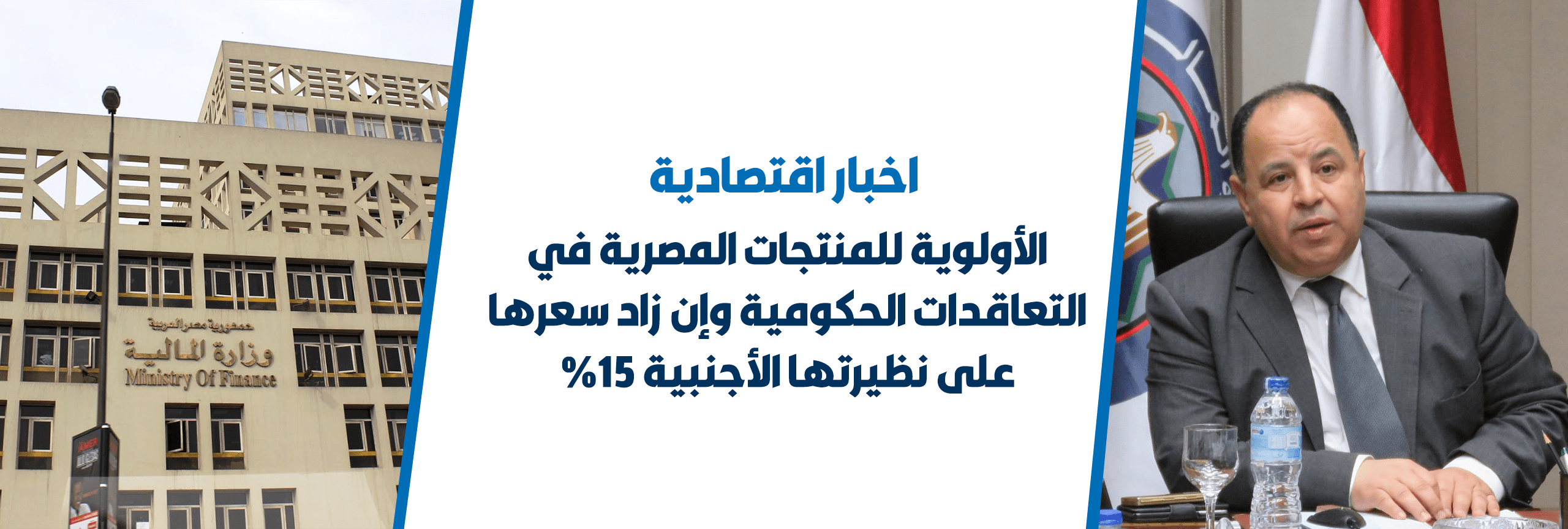
الأولوية للمنتجات المصرية في التعاقدات الحكومية وإن زاد سعرها على نظيرتها الأجنبية